
How Builders Can Write High-Converting Introduction Letters That Win More Construction Jobs
16/03/2026
For many builders, the hardest part of running a construction business isn't the work itself. The real challenge is keeping a steady flow of new jobs coming in.
One simple way to get in front of homeowners before your competitors is to send an introduction letter when a planning application appears. If someone is planning an extension, loft conversion or renovation, they will usually be looking for a builder soon, which is exactly why planning applications have become one of the most effective ways to find construction leads before your competitors do.
But most builders get this wrong. Their letters often look generic and unprofessional. There's no company logo, they use personal email addresses, and they forget to include trust signals like reviews, accreditations or proof of insurance.
A high converting builder marketing letter should do three things.
Build trust quickly
Make it easy for homeowners to contact you
Help your company stand out from other builders
In this guide we will walk through how to write a construction company introduction letter that actually converts into real projects.
Why Letter Marketing Still Works for Builders
Direct letters remain one of the most effective forms of builder lead generation because they reach homeowners at exactly the right moment. When someone submits a planning application they are usually about to start searching for contractors.
A good introduction letter allows you to present your company before competitors even know the project exists. It gives you the opportunity to introduce your business, show credibility and offer a free quote or consultation.
The key is keeping the message short, clear and helpful rather than overly sales focused.
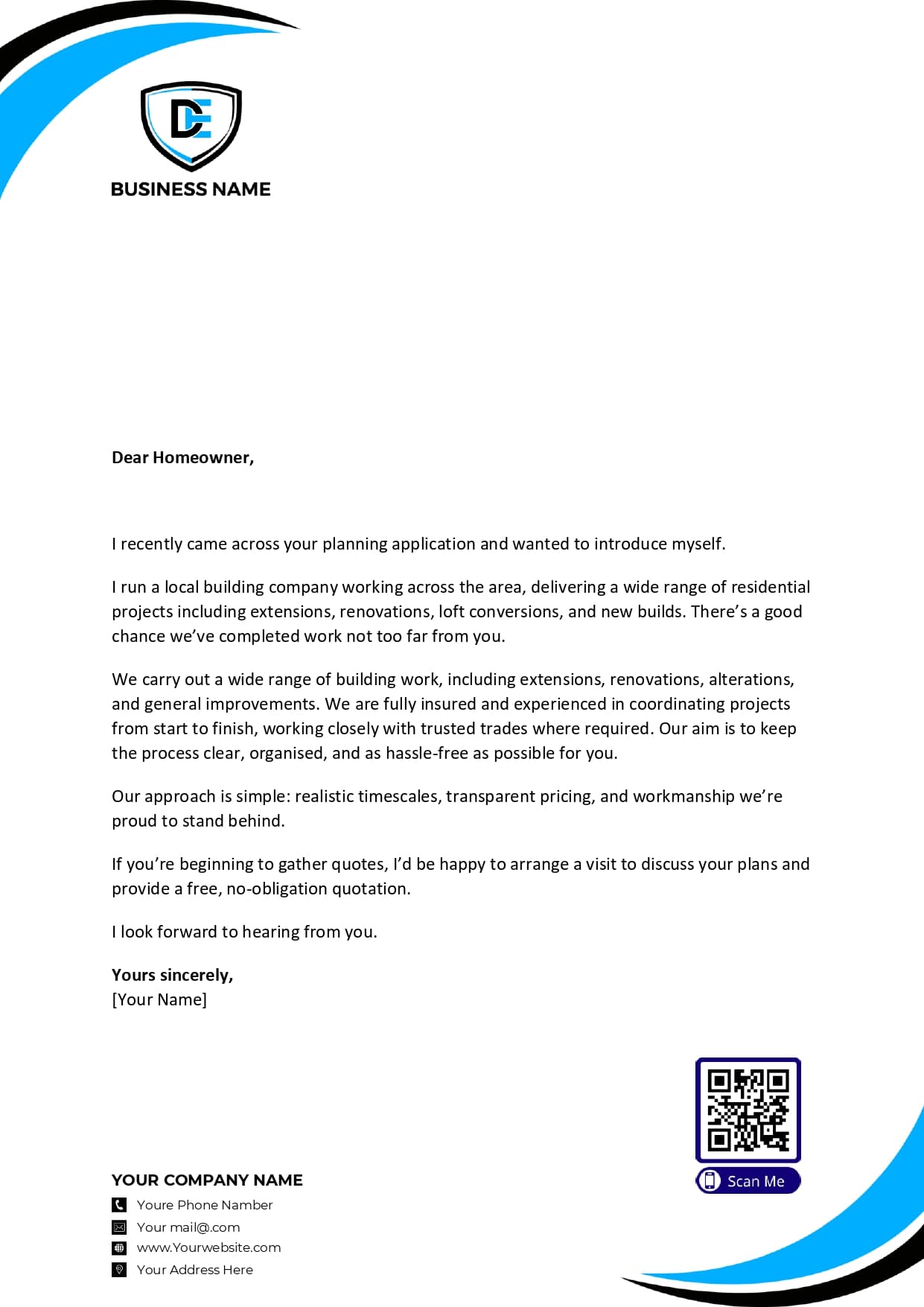
1. Use a Branded Letter (Your Logo Matters)
First impressions matter. A plain text letter with no branding can easily look like junk mail. A professional letterhead with your logo instantly makes your business appear more established and trustworthy.
Include the following elements in your letter.
Your company logo
Your brand colours
A clean letterhead design
Your company name clearly visible
These details help homeowners feel they are dealing with a legitimate construction company rather than a random contractor.
2. Add a QR Code With Your Business Details
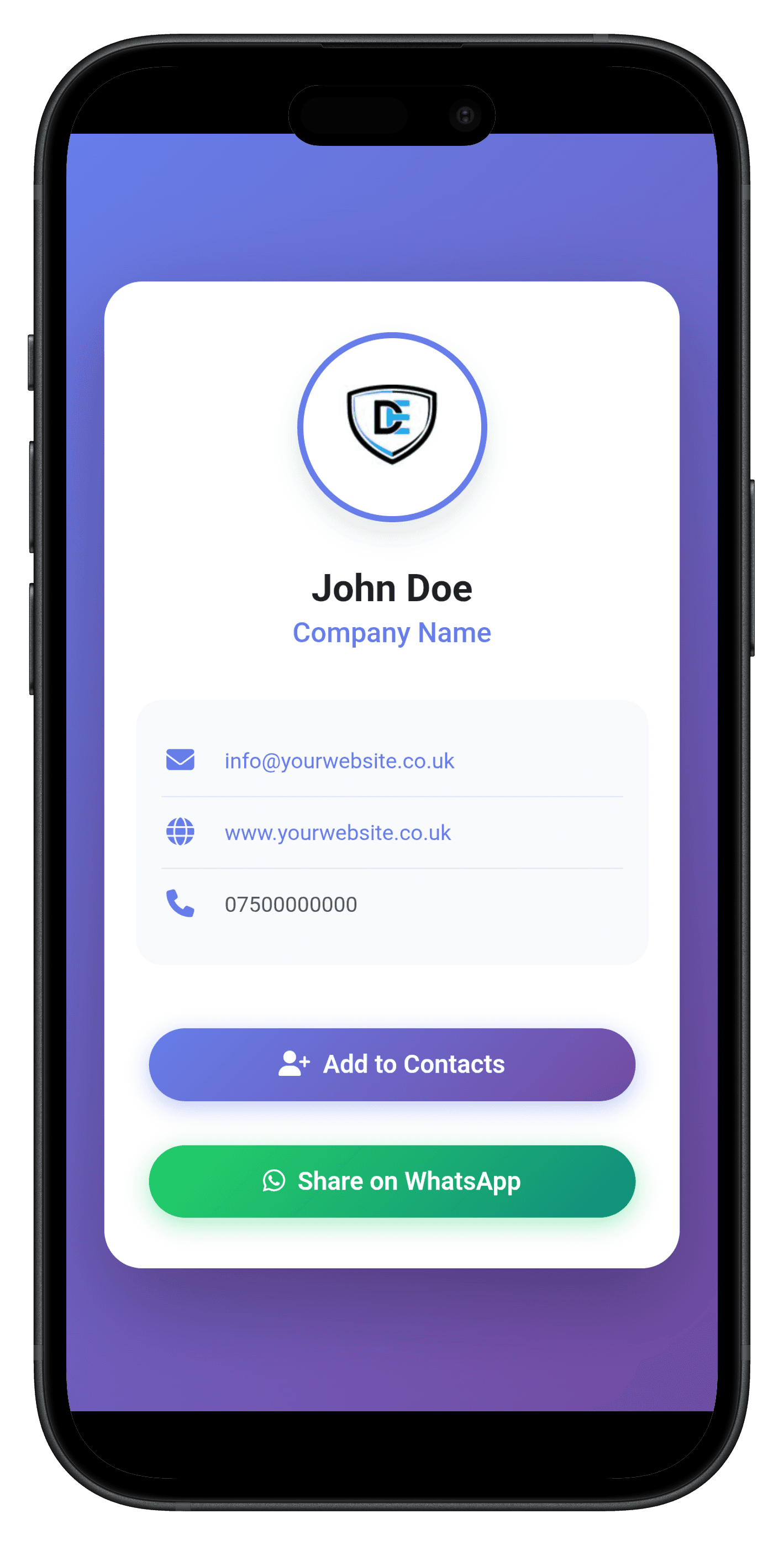
QR codes are one of the most powerful additions you can make to a builder marketing letter. When a homeowner scans the code they can instantly view your QR business profile and contact details.
For example the QR code could show.
Your company details
Phone number and email
Your website
A button to save your contact details directly to their phone
This removes friction and makes it much easier for homeowners to contact you. Instead of typing your details manually they can save your business information in seconds.
3. Track Engagement With Smart QR Codes
Modern planning application platforms can generate trackable QR codes, allowing builders to see when homeowners scan their letter, visit their website or save their contact details.
This kind of insight helps you understand which letters are working and where to focus your marketing budget, something traditional print marketing never offered.
4. Use a Professional Letter Template
Your layout should look organised and easy to read. A strong construction company introduction letter template usually includes a company header, clear contact details, a short introduction and a friendly message inviting the homeowner to get in touch.
Avoid large blocks of text. Most homeowners will skim the letter quickly, so clarity is more important than length.
The goal is simple. Make your company look professional, reliable and easy to contact.
5. Include Your Website and Business Address
Trust signals are extremely important when homeowners choose a contractor. If you have them, always include your company website, business address and company registration details.
These details reassure homeowners that your business is legitimate and established. When someone is about to spend £20,000 to £100,000 on a project, trust matters.
6. Showcase Your Reviews
Social proof plays a huge role in winning construction projects. Adding a QR code that links directly to your Google or Trustpilot reviews allows homeowners to quickly see feedback from previous customers.
Positive reviews create instant credibility and reduce the risk homeowners feel when contacting a new contractor. This alone can make the difference between receiving a call or being ignored.
7. Showcase Photos of Your Completed Projects
Homeowners want to see real evidence of your work, not just claims about quality. If you have photographs of projects you've previously completed, especially higher-end extensions, kitchen renovations or loft conversions, including a few of these images can be one of the most persuasive things in your letter.
Seeing a high-quality finished extension helps homeowners picture what's possible for their own project and gives them confidence that your company can deliver a similar standard. This matters even more for higher-value work, where homeowners are naturally more cautious about who they trust with a large investment.
Consider including.
Before and after photos from a recent extension or renovation
Close-up shots that highlight quality of finish, such as brickwork, joinery or fittings
A short project gallery linked from your QR code if space in the letter is limited
A mix of project types that reflect the kind of work you want to attract
You don't need professional photography for this to work. Good quality photos taken on a phone at the end of a job are often enough. The goal is simply to give homeowners visual proof that your business delivers the standard of work they're hoping for.
8. Highlight Certifications and Professional Memberships
Professional accreditations help your company stand out from other builders. If your business has trade memberships or certifications, display them clearly in your letter.
Examples include.
Federation of Master Builders (FMB)
Fully insured contractor
NICEIC
Gas Safe
Other relevant trade memberships
These logos communicate professionalism and reliability at a glance.
9. Use a Professional Email Address
Another small detail that affects trust is your email address. Avoid personal emails such as gmail.com, hotmail.com or outlook.com when contacting potential clients.
Instead use a domain email such as info@yourcompany.co.uk. It may seem minor, but it makes your business look far more professional.
10. Keep the Message Short and Friendly
Your letter should not feel like a sales pitch. Its purpose is simply to introduce your company and offer to help with the project.
A simple structure works best.
Introduce your building company
Mention the type of work you specialise in
Reference the homeowner's planning application
Offer a free no obligation quote
Invite them for a friendly chat about their plans
Builders who keep their message simple usually see the best response rates.
Builder Introduction Letter Example
"If you would like a free no obligation quote or simply want to talk through your plans, feel free to get in touch. We would be happy to help."
11. Give Homeowners a Reason to Contact You
A homeowner may receive letters from several builders after submitting a planning application. One of the easiest ways to stand out is to include a genuine incentive for getting in touch.
The offer doesn't need to dramatically reduce your profit. Instead, it should give homeowners a reason to remember your business and start a conversation.
Examples include.
Free kitchen design consultation
Free architectural drawing review
Free site survey
£500 off selected projects
Free boiler installation with qualifying home extensions
The key is to offer something that adds value to the homeowner while encouraging them to contact you before comparing multiple builders.
Avoid gimmicks or unrealistic discounts. A simple, relevant offer is often enough to increase response rates.
Timing Matters When Sending Builder Introduction Letters
Timing is critical when generating construction leads from planning applications. Homeowners usually begin searching for builders shortly after submitting or receiving planning permission.
Reaching out early allows your company to start the conversation before competitors.
12. Follow-Up Letters Are Where Many Jobs Are Won
Many homeowners won't contact a builder after receiving the first letter. That doesn't mean they aren't interested.
Some homeowners may still be.
Choosing an architect
Waiting for planning permission to be approved
Finalising their budget
Comparing different builders
Deciding whether to proceed with the project
This is why follow-up letters are so important. Rather than sending a single introduction letter and hoping for a response, stay visible throughout the homeowner's planning journey.
Setting up automated follow-up letters 2–4 weeks after your first contact can remind homeowners about your business at the point they're starting to gather quotations, without you having to remember to send them manually.
An even more effective approach is to trigger planning approval follow-ups automatically, since approval is often the moment homeowners move from planning to actively looking for a builder, making it one of the best times to get back in touch.
Many builders give up after one attempt. By staying visible at different stages of the project, you give homeowners multiple opportunities to choose your business when they're ready.
13. Make Your Letter Feel Premium
Your letter isn't just delivering information. It's representing your business.
A professionally printed letter on thicker, higher-quality paper immediately feels more premium than a standard sheet of printer paper. It gives homeowners the impression they're dealing with an established company that pays attention to detail.
Consider using.
Premium 120–160gsm paper instead of standard office paper
High-quality colour printing
A professionally designed letterhead
A matching branded envelope where possible
Small details like paper quality, branding and print finish all contribute to the first impression your business makes. If a homeowner receives several builder letters on the same day, the one that looks and feels more professional is far more likely to be read and remembered.
Remember, you're often competing with other builders for the homeowner's attention. Investing a little more in presentation can help your company stand out before the homeowner even reads the first sentence.
14. Add a Personal Touch to Your Letter
Homeowners are far more likely to read a letter that feels like it was written specifically for them, rather than something that has been mass-produced. While you don't need to handwrite every letter, adding a few personal touches can make your business appear more approachable, professional and genuine.
Consider including.
A real handwritten signature instead of a typed name
The homeowner's name and property address where possible
A short handwritten note such as “Happy to discuss your plans if it helps” or “Wishing you the best with your project”
A direct mobile number so homeowners know they're contacting a real person rather than a call centre
These small details help your letter feel less like advertising and more like a genuine introduction from a local builder. The goal isn't to make it look overly polished or corporate. Homeowners are looking for someone they can trust to work on their home, so a personal, friendly approach often creates a better first impression than an aggressive sales message.
Small improvements like a handwritten signature and premium paper all reinforce the same message: you're a professional builder who takes pride in every aspect of your business.
15. Optimise the Entire Customer Journey
Sending a professional introduction letter is only the first step. Before picking up the phone, most homeowners will visit your website, read your reviews, browse completed projects and compare you with other builders.
If your online presence doesn't inspire confidence, you risk losing the enquiry even if your letter was excellent. Make sure your website works well on mobile, clearly explains your services, shows photographs of completed projects and testimonials, and makes it easy to request a quote.
Your website should reinforce the same professional image as your letter. Consistent branding, clear contact details and evidence of previous work all help build the trust needed to turn construction lead generation into a steady stream of booked projects.
16. A/B Test Different Letter Templates
Small changes to your introduction letter can make a noticeable difference to response rates. Testing different versions helps you understand what resonates most with homeowners, rather than relying on guesswork.
You could experiment with.
Different headlines or opening paragraphs
A more personal or formal tone
Different project photos
Different customer testimonials
The placement of your QR code
Different offers or calls to action
Alternative layouts and branding
If you're using trackable QR codes, you can compare different letter templates to see which versions generate the most scans, website visits and enquiries. Testing one change at a time helps you identify what works best, allowing you to continuously improve your response rates and get more value from every direct mail campaign.
Common Mistakes Builders Make When Sending Introduction Letters
Even experienced builders can reduce their response rates by making a few simple mistakes. Often, improving your results isn't about sending more letters. It's about avoiding the small issues that stop homeowners from getting in touch.
Here are some of the most common mistakes builders make.
Writing long, sales-heavy letters instead of keeping the message short and friendly
Sending letters without professional branding or a company logo
Using a personal Gmail, Hotmail or Outlook email address instead of a business email
Forgetting to include trust signals such as customer reviews or trade accreditations
Not giving homeowners a clear and simple way to contact you
Sending a single letter and never following up
Targeting projects that don't match your expertise or preferred project value
Sometimes the difference between a campaign that performs well and one that doesn't comes down to these small details. By removing common mistakes and presenting your business professionally at every stage, you'll turn more planning application leads into genuine enquiries.
How BuildAlert Helps Builders Win More Work
BuildAlert helps builders discover high intent construction leads by tracking planning applications across the UK.
Builders can use BuildAlert to.
Find home extension leads
Discover loft conversion projects
Identify renovation and building work near them
Send branded introduction letters directly to homeowners
Each letter can include trackable QR codes so builders can see when homeowners scan the letter, visit their website or save their contact details.
What Response Rates Should Builders Expect?
Every construction business is different, so there isn't a guaranteed response rate from direct mail campaigns. Results will vary depending on factors such as.
The type of projects you target
Your location
The quality of your introduction letter
Your website and online reviews
The competitiveness of your local market
Whether you follow up with homeowners
As a general guide:
1-2% response/conversion is generally considered a solid baseline.
2-5% is very good for well-targeted campaigns.
4-8% is achievable with highly targeted lists, strong offers and consistent volume, but this shouldn't be treated as an industry average unless you have your own data to back it up.
Rather than judging a campaign on a small batch of letters, measure performance over several months. Consistently contacting relevant planning applications, maintaining a professional online presence and following up at the right time will usually produce better long-term results than relying on one-off mailshots.
Final Thoughts
A successful builder marketing campaign isn't built around a single letter. It's a combination of good timing, professional branding, a strong website, genuine customer reviews and consistent follow-up.
When these elements work together, planning applications become one of the most effective ways to generate a predictable pipeline of construction leads for your business.
If you're looking for an easier way to discover planning applications, create branded introduction letters and automatically follow up when planning permission is approved, you can try BuildAlert today.