
House Extension Insurance Leads for Insurers & Brokers
BuildAlert helps insurance companies and brokers find homeowners who need contract works, renovation or self-build insurance - the cover that protects a build while it's actually in progress, which most standard home insurance policies don't provide. Search UK planning applications by postcode, choose the project types you want to target, and we'll print and post personalised letters or postcards on your behalf.
Cover needs to be arranged before work starts, and most homeowners sort this out after submitting a planning application but before the builder is on site. That gives you a genuine window to introduce your cover while they're still finalising the build and before a builder's recommendation, or their existing insurer by default, becomes the obvious choice.
Not every extension carries the same risk or value. Double storey and wraparound extensions, larger renovations and self-builds involve higher sums insured, longer build programmes and - for self-builds - often a lender requirement for proof of cover before funds are released, making them worth prioritising over a modest single storey addition.
There are no subscriptions and no shared leads. You only pay when you decide to send a personalised letter or postcard, and we handle the printing and first-class postage for you.
Ready to generate more insurance leads? Create a free BuildAlert account and start browsing live planning applications today.
Why Planning Applications Beat Traditional Insurance Lead Generation
Most insurance providers targeting renovation and self-build cover have already tried Google Ads, Facebook Ads, purchased leads, comparison websites or affiliate lead generation - and run into the same problems: rising cost per click, leads sold to several providers at once, and homeowners who've already arranged cover by the time they're contacted.
None of these channels confirm whether a homeowner is actually mid-project right now. Planning applications do: almost every house extension, loft conversion or major renovation needs a planning application or a lawful development certificate before work can start, and BuildAlert monitors these applications from every UK council and flags the ones most likely to need contract works, renovation or self-build cover.
That means you're reaching the homeowner while they're still organising their build and their finances, not after they've already taken out a policy through a comparison site or defaulted to their existing insurer.
You decide which planning applications to act on and search by location and project type yourself - there's no bidding for enquiries and no data shared with other providers.
Finding the Homeowners Most Likely to Need Cover
Project scale is the clearest signal of which homeowners are worth prioritising. Double storey and wraparound extensions, larger renovations and self-builds carry higher rebuild costs and higher sums insured than a modest single storey extension - and the risk exposure during the build is genuinely greater, from deeper foundations to longer periods with the property partially open to the elements.
Self-builds are a particular case: many lenders require proof of adequate cover before releasing funds, so these homeowners are often actively comparing providers early, rather than needing to be convinced cover is necessary at all.
A single storey extension still needs contract works cover, but it's a lower-value, lower-urgency prospect than a double storey extension or self-build - useful for volume, but not where to spend the most time chasing a response.
Filtering by project type and postcode lets you focus specifically on the higher-value work in the areas you cover, rather than treating every extension application as an equally good prospect.
What a Strong Introduction Letter Should Say
The strongest letters don't just introduce your business - they name the gap the homeowner might not have considered. Standard home insurance typically doesn't cover building work in progress, and cover can be further restricted or excluded altogether if the property becomes partially unoccupied during a renovation - most homeowners only discover this after a claim, not before.
Because cover needs to be arranged before work starts, timing matters in the letter itself as much as in when you send it - a homeowner who has just had planning permission granted is thinking about start dates, so a letter that gets straight to when cover needs to be in place tends to land better than a general introduction.
If your business holds relevant accreditations - FCA authorisation, membership of a recognised broker body, or specific self-build insurance credentials - naming them briefly is worth considering, though that's a detail for you to confirm applies to your business rather than something BuildAlert can state on your behalf.
BuildAlert handles the printing, your branding and first-class postage for every letter you send, using the homeowner's name and address exactly as they appear on the application.
When to Follow Up
Following up matters here for a different reason than it does when someone's comparing builders. Choosing a builder is a preference decision that can drift for weeks. Arranging cover isn't - it's a binary requirement that has to be in place before work starts, not something a homeowner can put off indefinitely.
Prior approval and householder applications go through a statutory decision period, so there's a genuine, knowable trigger point in the process. Once a decision is published, the start date stops being hypothetical and cover becomes an immediate practical need - a follow-up sent at that point lands differently to the first letter sent at submission stage, when the start date can still feel distant.
Self-builds have a distinct, harder trigger. Many lenders won't release funds without proof of adequate cover in place, so for these homeowners a follow-up isn't “have you considered this” - it's closer to “you can't proceed without it”, a stronger and more literal urgency than any general reminder to stay in touch.
BuildAlert lets you schedule an automatic follow-up letter or postcard 7 or 14 days after your first campaign, or automatically once planning permission is approved - the same scheduling used across the platform. For contract works and self-build cover, timing it to the decision is what matters: that's the point where the requirement stops being theoretical and starts being something the homeowner actually has to act on.
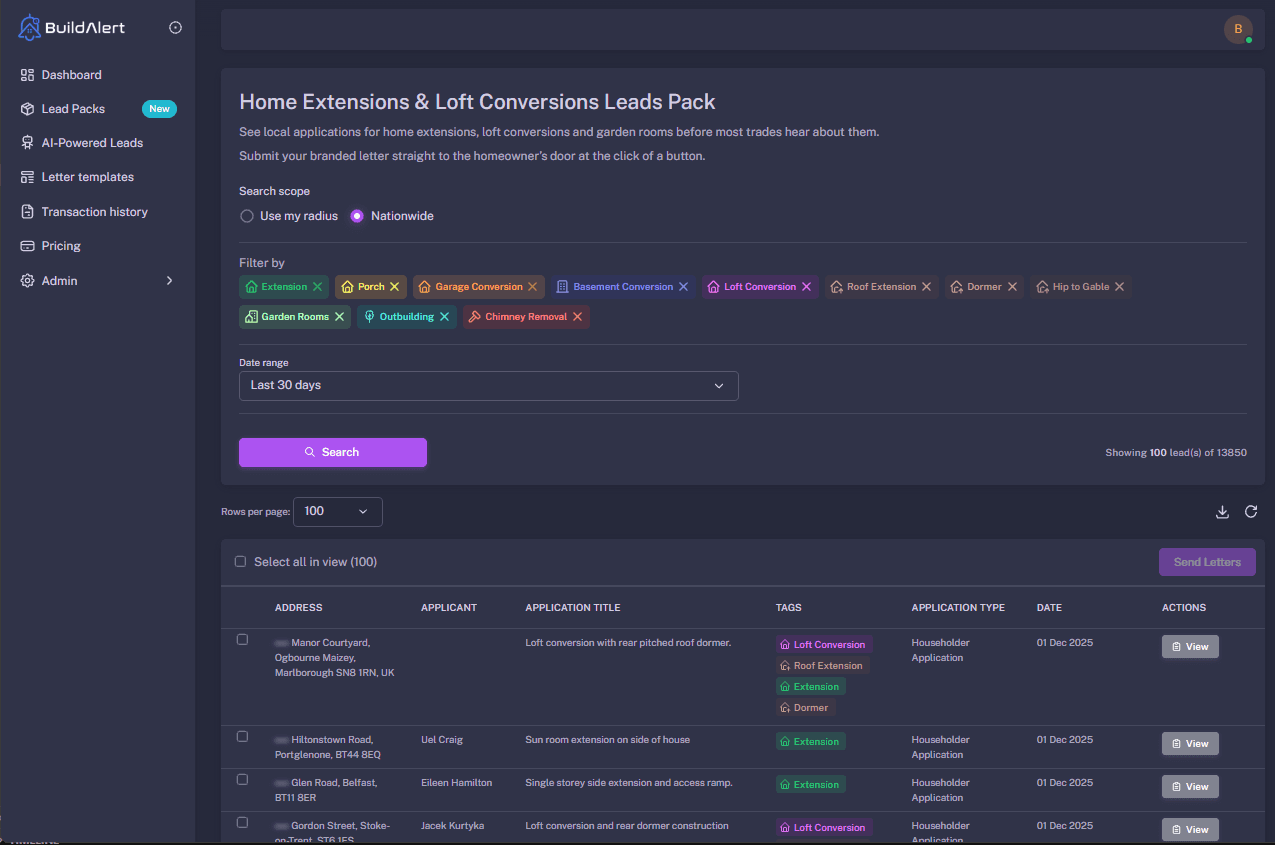
Example: BuildAlert highlighting house extension and renovation planning applications by postcode
Enter your postcode to discover £1000s worth of insurance leads near you
Building Projects Insurance Providers Can Target
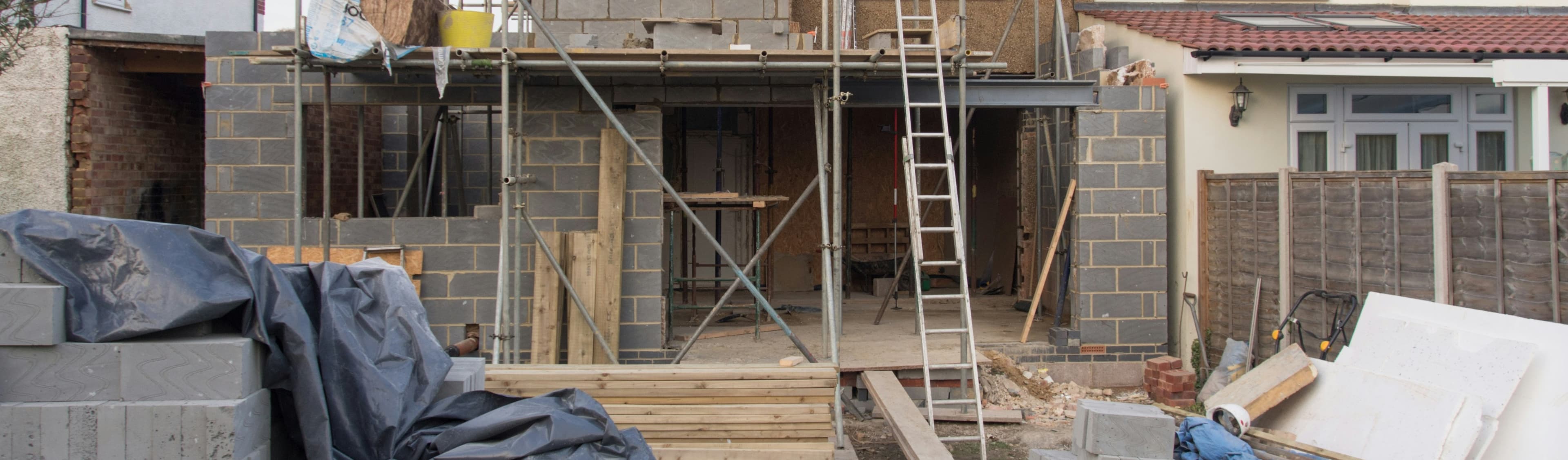
Single Storey Extensions
Single storey rear and side extensions are the most common home improvement project in the UK, and a reliable source of contract works insurance enquiries for brokers who reach homeowners early.
Standard home insurance policies typically don't cover building work in progress, so even a modest single storey extension usually needs specific contract works or renovation cover arranged before the builder starts on site.
BuildAlert surfaces these planning applications as soon as they're submitted, giving you the chance to introduce cover while the homeowner is still finalising their build - before a gap in cover becomes a problem.

Double Storey Extensions
Double storey extensions carry more risk exposure than a single storey addition - deeper foundations, longer build programmes, and often a period where the property is partially open to the elements.
These larger projects almost always need full planning permission, so BuildAlert can identify them from the moment the application is lodged, well before the homeowner has arranged cover.
Higher sums insured and a higher risk profile make double storey extensions some of the more valuable contract works insurance prospects, and homeowners taking them on are more likely to actively look for specialist cover rather than assume their existing policy is enough.
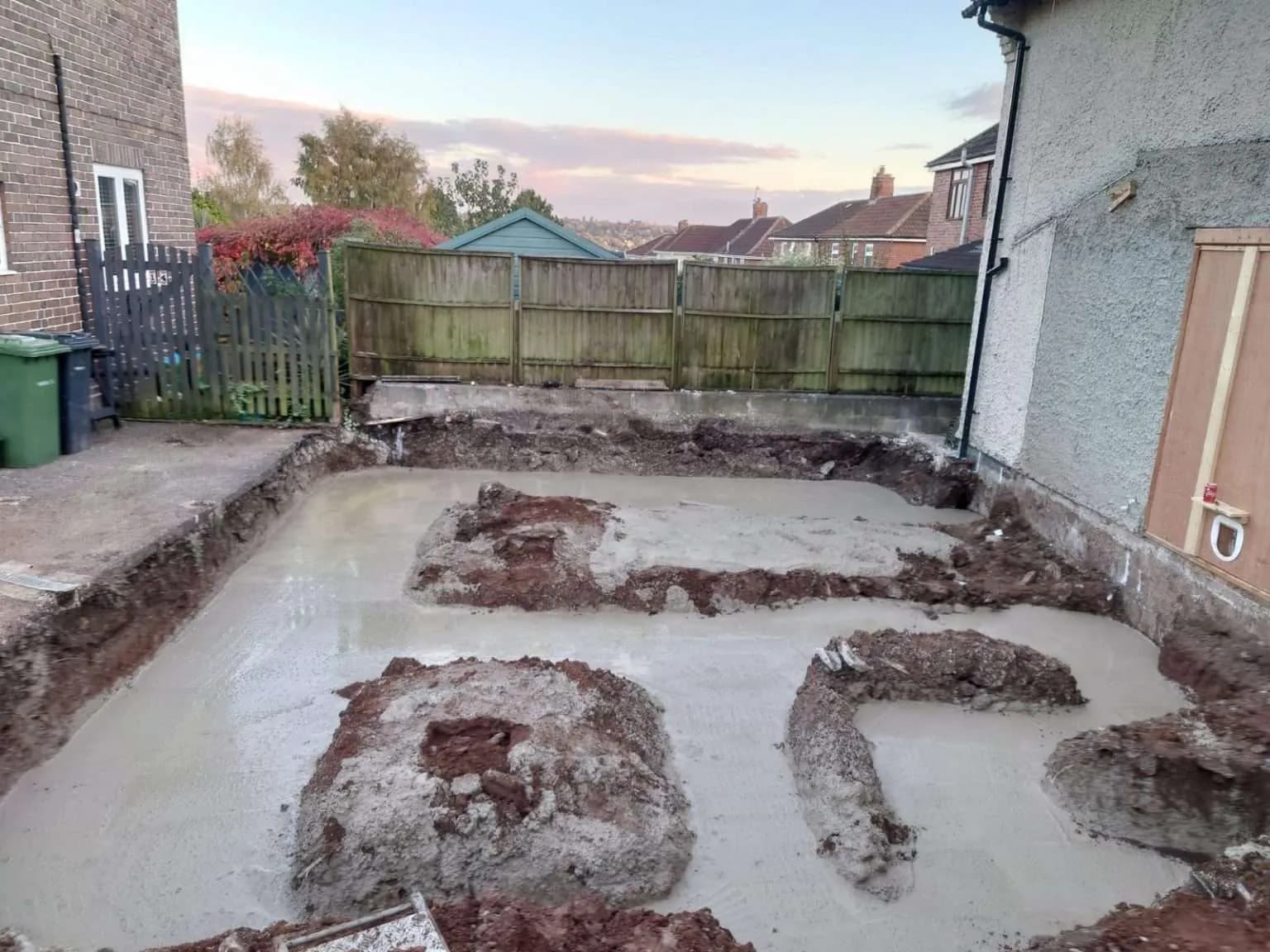
Wraparound Extensions
Wraparound extensions combine a rear and side extension into a single larger project, increasing both the footprint of the build and its complexity.
These projects often involve removing large sections of external wall, structural steelwork and an extended build programme - all factors that raise the stakes on adequate contract works cover.
BuildAlert flags wraparound applications separately from simpler single-element extensions, helping you prioritise the homeowners most likely to need, and value, specialist advice on cover.

Large Home Renovations
Major renovation projects, from whole-house refurbishments to gutting and rebuilding significant parts of a property, often leave a home partially uninhabitable or unoccupied during the build.
Standard buildings insurance frequently excludes or restricts cover once a property is unoccupied or undergoing major structural work, making renovation-specific and unoccupied property cover a genuine necessity rather than an upsell.
BuildAlert tracks large-scale renovation and refurbishment applications so you can reach homeowners early enough to explain these gaps in cover before work begins, rather than after a claim has already been refused.

Loft Conversions
Loft conversions add significant value and living space, but the structural alterations involved - new steel beams, roof changes and additional load - often fall outside standard home insurance.
Dormer, mansard and hip-to-gable conversions in particular tend to need planning permission, giving BuildAlert clear visibility of these projects at the application stage.
Reaching homeowners while their loft conversion is still being planned puts you in front of them before they assume their existing insurer already has it covered.
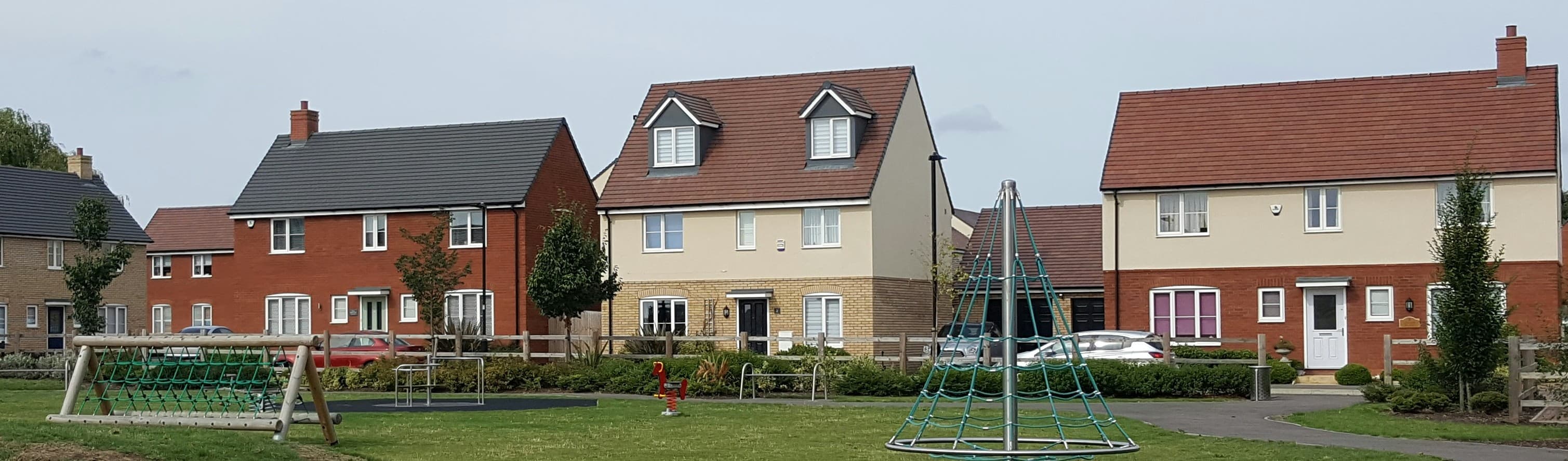
Self-Build Homes
Self-build and custom-build homes carry some of the highest insurance stakes of any residential project - self-build insurance is widely treated as essential, not optional, cover for the length of the build.
Many self-build mortgage lenders require proof of adequate cover before releasing funds, so these homeowners are often actively researching insurance options from an early stage.
BuildAlert identifies new build and self-build planning applications as they're submitted, giving specialist providers a direct route to homeowners already looking for exactly this type of policy.